
Highlights
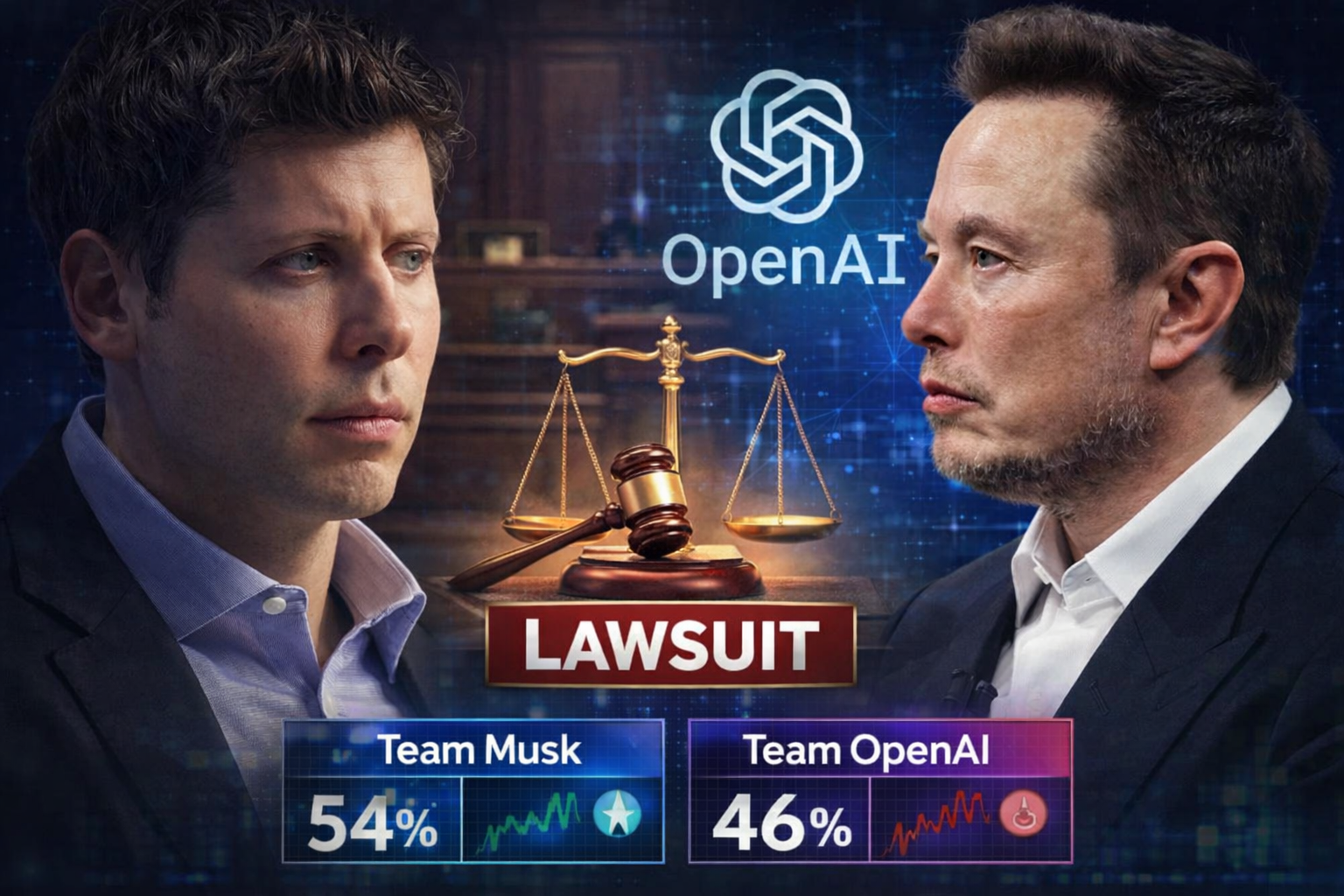
- Shifting Odds: Prediction market confidence in Elon Musk prevailing has dropped significantly, falling from nearly 60% to 38% following his recent courtroom testimony.
- Legal Setbacks: Judge Yvonne Gonzalez Rogers narrowed the scope of the Elon Musk lawsuit by dismissing several fraud-related counts, leaving only claims for breach of charitable trust and unjust enrichment.
- Testimony Impact: Musk’s admission under oath that he “didn’t read the fine print” of a 2017 term sheet regarding OpenAI’s restructuring has weakened his legal standing in the eyes of market speculators.
As the high-stakes legal battle between the world’s richest man and the world’s leading AI lab intensifies in an Oakland federal courtroom, a different kind of jury is delivering a real-time verdict: the prediction markets. Since the Elon Musk lawsuit against OpenAI, Sam Altman, and Greg Brockman officially entered its trial phase in late April 2026, platforms like Kalshi and Polymarket have seen massive swings in sentiment. For much of early 2026, speculators held a relatively optimistic view of Musk’s chances, with odds of a “Yes” outcome (defined as a victory or significant settlement for Musk) peaking near 59.9%.
However, the tide turned sharply in early May 2026. Following the first full week of testimony, the probability of Musk winning plummeted to approximately 38%. This shift reflects the collective wisdom of thousands of traders who are processing daily courtroom revelations. The Elon Musk lawsuit hinges on the allegation that OpenAI abandoned its original non-profit mission to become a “closed-source de facto subsidiary” of Microsoft. Yet, as the defense presents evidence from internal emails and founding documents, traders are increasingly pricing in the difficulty of proving that a legally binding “founding agreement” ever existed in the way Musk describes.
The “Fine Print” Fiasco: Why Market Confidence is Cratered
The most damaging blow to the Elon Musk lawsuit came during Musk’s own time on the witness stand. Under cross-examination, Musk admitted that he had not thoroughly reviewed a 2017 term sheet that outlined the potential for OpenAI to transition into a for-profit structure. His statement that he “didn’t read the fine print” has become a focal point for market bears, who argue that a sophisticated investor of Musk’s stature cannot easily claim he was deceived by documents he signed or authorized.
This admission, coupled with Judge Yvonne Gonzalez Rogers’ decision to dismiss the most aggressive fraud claims, has stripped the lawsuit of its “headline-grabbing” power and turned it into a technical battle over fiduciary duties and charitable trust laws. Prediction markets are now signaling that while Musk may have a moral grievance, the legal threshold for reversing OpenAI’s multi-billion dollar for-profit restructuring is incredibly high. Traders on Polymarket are currently giving a “settlement of $10 billion or more” only a 14% chance of occurring by the end of 2026.
Impact on OpenAI’s IPO and the Broader AI Landscape
Beyond the courtroom drama, the Elon Musk lawsuit is casting a long shadow over OpenAI’s future corporate plans. Markets tracking the “OpenAI IPO before 2027” have seen a notable decline in probability, falling to just 22%. Investors fear that the ongoing litigation and Musk’s demand for a complete reversion to non-profit status creates a “poison pill” for any potential public offering. With OpenAI currently valued at an estimated $850 billion, any court-ordered restructuring would be catastrophic for its current backers, including Microsoft.
The trial has also exposed the deep personal rift between the former co-founders. Evidence presented in court, including Greg Brockman’s personal diary and aggressive texts from Musk sent just days before the trial, portrays the Elon Musk lawsuit not just as a quest for AI safety, but as a byproduct of a failed power struggle. As Musk’s own AI company, xAI, continues to grow, OpenAI’s defense team has successfully argued to the public and to the markets that Musk is acting as a “disappointed competitor” rather than a concerned philanthropist.
What’s Next for the 2026 Legal Showdown?
As the trial moves into mid-May, the focus will shift to testimony from Sam Altman and Microsoft executives. Prediction market participants will be watching for any evidence that OpenAI intentionally misled Musk during his $38 million donation period. If Musk’s team can produce a “smoking gun” email that confirms a breach of trust, the odds could swing back in his favor. However, the current trend suggests that the Elon Musk lawsuit is facing an uphill battle.
For now, the Elon Musk lawsuit remains the defining legal event of the AI era. It represents a fundamental clash between the idealistic roots of AI development and the trillion-dollar reality of the modern tech industry. Whether Musk wins or loses in court, the prediction markets have already made one thing clear: the path to a $134 billion victory is narrowing by the day. Investors and AI enthusiasts alike will continue to monitor these real-time odds as the trial of the century nears its conclusion.
Visit Augmenting Money for the most recent information.
Leave a Reply