
Summary:
- Xi Jinping calls China Russia ties “precious” – signals strong strategic importance.
- Economic ties deepen – China boosts energy trade and tech support to Russia.
- Global shift – partnership challenges Western influence.
The Beijing-Moscow Axis in a Changing World
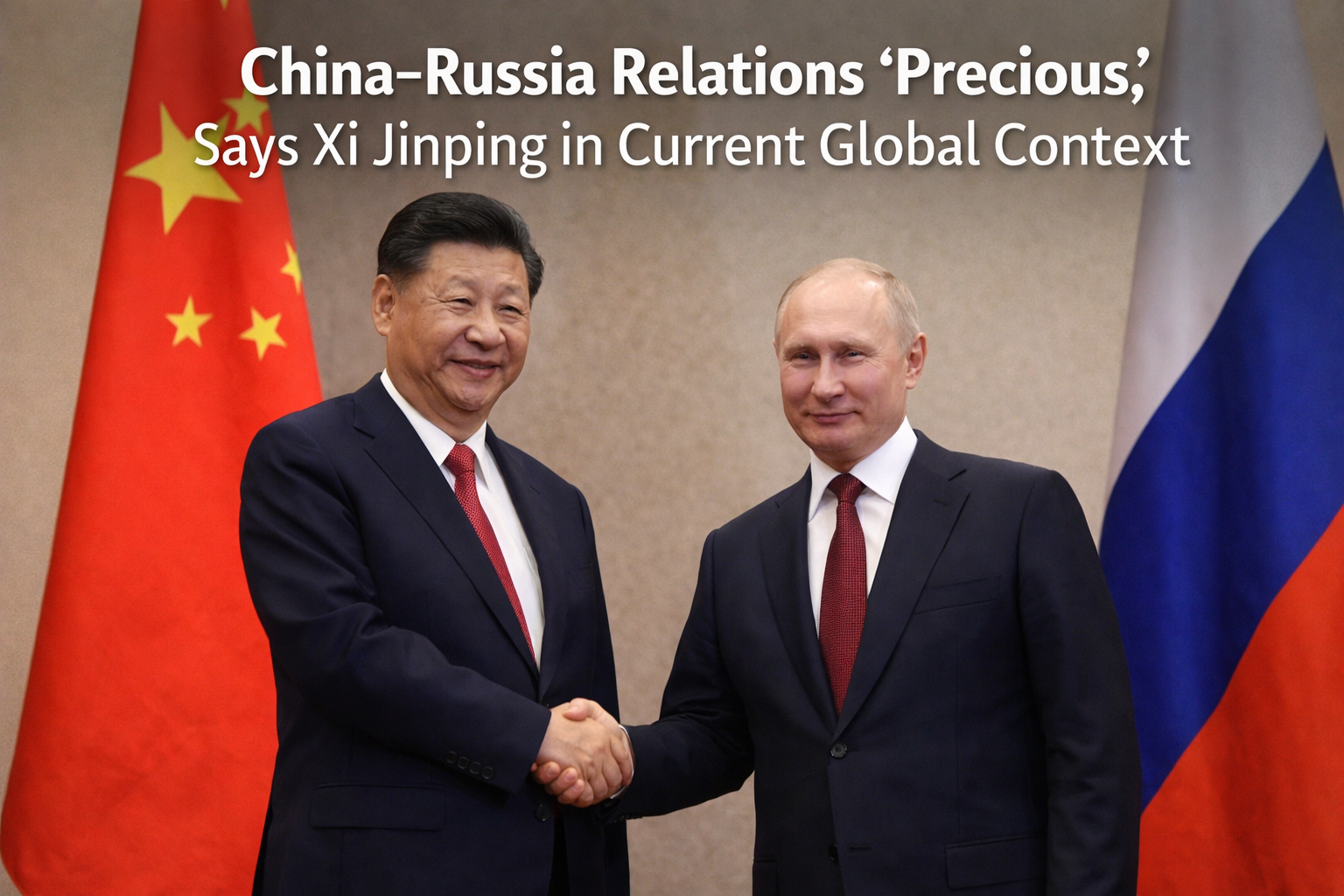
As the global geopolitical landscape shifts toward a multipolar reality, the depth of Xi Jinping China Russia ties has reached a historic inflection point. During a high-level meeting in Beijing with Russian Foreign Minister Sergey Lavrov on April 15, 2026, President Xi Jinping described the stability between the two nations as “precious” in a world defined by “change and chaos.”
This article analyzes the strategic weight of this partnership, its implications for the U.S.-led financial order, and why Indian entrepreneurs and global investors must pay close attention to this strengthening alliance. We will cover the economic integration of Eurasia, the military cooperation between Moscow and Beijing, and the potential risks for Western capital markets.
Why Xi Jinping Calls the Partnership ‘Precious’
The term “precious” was not chosen at random. It signals that for Beijing, the China Russia ties are no longer just a tactical convenience but a foundational pillar of its national security. As Western sanctions continue to isolate the Russian economy, China has stepped in as a primary consumer of Russian energy and a supplier of industrial technology, further strengthening China Russia ties.
Key Drivers of Russia China Cooperation
- Energy Security: Russia remains China’s top oil supplier, providing over 2 million barrels per day through the ESPO pipeline and maritime routes.
- Financial Autonomy: Both nations are aggressively pursuing “de-dollarization,” with over 90% of bilateral trade now settled in Yuan or Rubles (Source: People’s Bank of China, 2025 data).
- Military Synergy: Joint naval drills in the South China Sea and the Sea of Japan have become a quarterly occurrence, challenging U.S. naval dominance in the Pacific.
Impact on US Investors: Navigating the New Cold War
For US investors, the strengthening of Xi Jinping China Russia ties creates a complex risk profile. The primary concern is “secondary sanctions.” If Beijing is perceived to be providing lethal aid or critical dual-use technology to Moscow, the U.S. Treasury may target Chinese banks.
Strategic Considerations for US Portfolios:
- Supply Chain Decoupling: Continued cooperation accelerates the China Plus One strategy, benefiting manufacturing hubs in Vietnam and Mexico.
- Tech Sovereignty: Expect increased U.S. restrictions on AI and semiconductor exports to China to prevent technology from leaking into Russian defense systems.
The Indian Perspective: Balancing the Triad
Indian entrepreneurs and policymakers face a unique challenge. India maintains a robust defense relationship with Russia while simultaneously acting as a key partner in the U.S.-led Quad.
Opportunities for Indian Entrepreneurs
- The Middle Corridor: As Russia and China integrate, India’s involvement in the International North-South Transport Corridor (INSTC) becomes vital for bypassing traditional Western-controlled trade routes.
- Market Vacuum: With Western brands exiting Russia, Indian pharmaceutical and textile firms have a “blue ocean” opportunity to fill the gap, provided they can navigate the complex payment gateways involving Yuan-Ruble-Rupee settlements.
Economic Data: The $260 Billion Milestone
In 2025, trade between the two giants surpassed $260 billion, a record high that defied global inflationary trends. For global business readers, this represents the birth of a self-sustaining economic bloc that is increasingly insulated from the G7 financial system.
The China-Russia partnership is the most significant geopolitical development of the 21st century. It isn’t just about trade; it’s about rewriting the rules of global governance. Dr. Elena Vorona, International Relations Analyst.
Conclusion: A Multipolar Future
The declaration that Xi Jinping China Russia ties are “precious” confirms that the Beijing-Moscow axis is here to stay. While this cooperation provides stability for the two nations, it introduces volatility into global markets and challenges the traditional dominance of the U.S. dollar. For investors and entrepreneurs from New York to New Delhi, the ability to read these diplomatic tea leaves will be the difference between profit and obsolescence in the new global context.
Visit Augmenting Money for the most recent information.
Leave a Reply