
Highlights
- Foundational Ecosystem Build: Tata Electronics and ASML Sign MoU for Advanced Lithography Tools, Marking India’s First Tata-ASML Semiconductor Deal
- Deep-Tech “Brain Bridge”: The deal creates an educational and research corridor linking top Dutch universities with six IITs and IISc Bangalore to train semiconductor engineers.
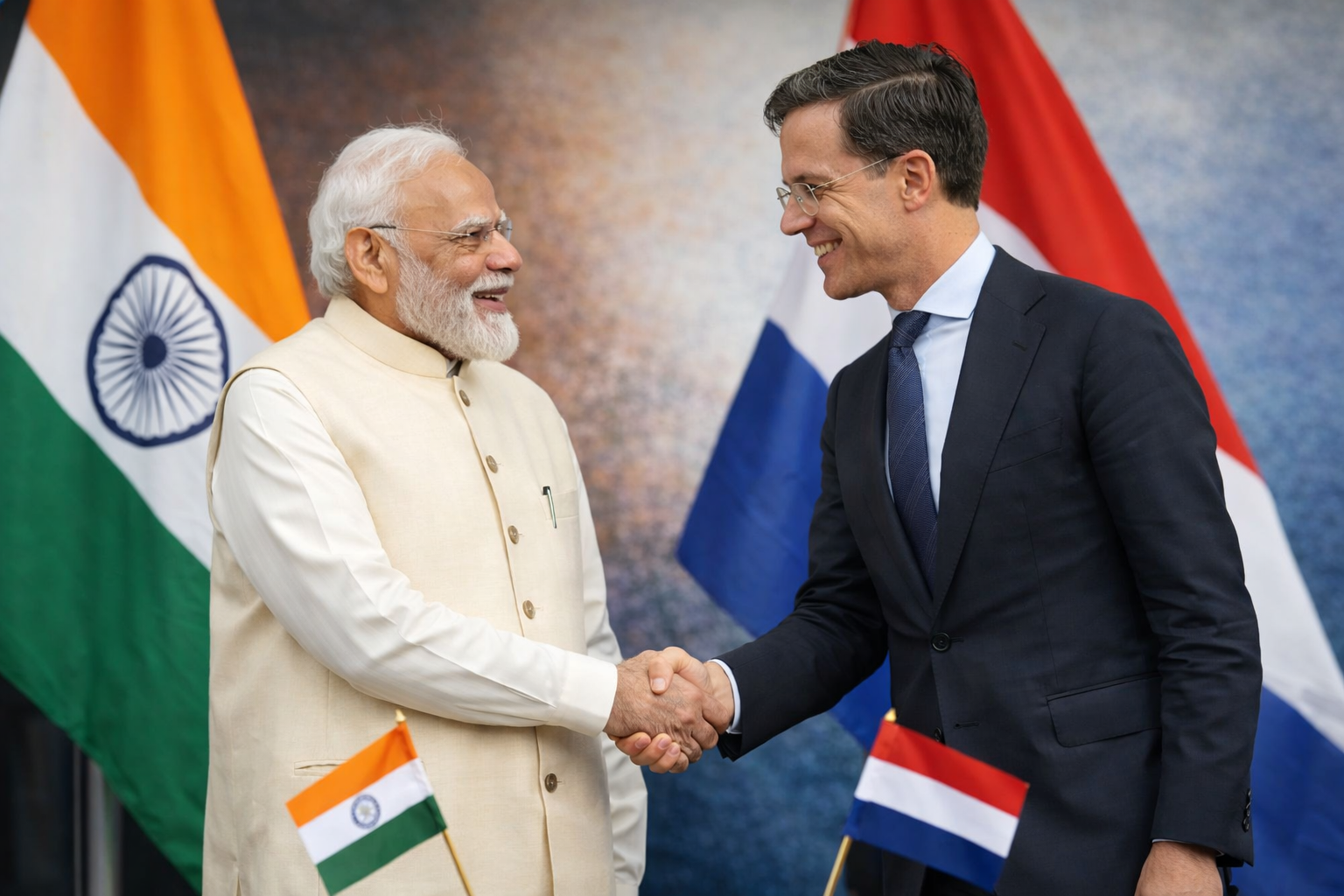
- Geopolitical Elevation: Witnessed by PM Modi and PM Jetten, the agreement forms the core of a new 5-year India-Netherlands strategic tech roadmap.
The global semiconductor landscape is undergoing a profound geographical rebalancing. In a landmark development during Prime Minister Narendra Modi’s official visit to The Hague, Tata Electronics and Dutch lithography pioneer ASML officially signed a strategic agreement aimed at accelerating India’s domestic chip-making capabilities. This Tata-ASML semiconductor deal serves as the crown jewel of an expansive bilateral upgrade, which saw India and the Netherlands forge a historic 17-pact partnership spanning critical technology, defense industrial roadmaps, and renewable energy. By bringing together the industrial might of the Tata Group and the absolute technological monopoly of ASML, the two nations are translating high-level diplomatic frameworks into physical, deep-tech infrastructure.
The strategic significance of this alliance cannot be overstated. ASML is universally recognized as the world’s premier supplier of high-precision lithography equipment the incredibly complex machines that use specialized light sources to print microscopic circuits onto silicon wafers. Without lithography, modern chip fabrication is fundamentally impossible. For Tata Electronics, which is rapidly constructing its $\$11$ billion, 300 mm (12-inch) commercial semiconductor fabrication plant in Dholera, Gujarat, securing a direct, long-term collaboration with ASML provides an unparalleled technological cushion. It ensures that India’s foundational foray into front-end semiconductor manufacturing can bypass the typical early-stage technical hurdles associated with equipment calibration, yield optimization, and supply chain bottlenecks.
Analysis: Deconstructing the Impact of the Tata-ASML Semiconductor Deal
To appreciate the long-term ramifications of this agreement, it is essential to analyze the specific components of the MoU and how they fit into India’s overarching semiconductor ambitions. The Tata-ASML semiconductor deal is explicitly structured not merely as a transaction between an equipment vendor and a buyer, but as a holistic, ecosystem-building partnership. The collaboration focuses heavily on deploying ASML’s full suite of advanced lithography tools and digital twin solutions. By integrating these industry-leading technologies from day one, the Dholera Fab will possess the operational consistency required to deliver international-grade commercial silicon to global automotive, consumer electronics, and artificial intelligence markets.
Furthermore, the timing of the deal coincides perfectly with the broader Indo-Dutch Strategic Technology Alliance. Governments worldwide are actively seeking to de-risk their technological pipelines, migrating critical infrastructure away from geopolitically volatile corridors. For the Netherlands, anchoring its premier technology company within India’s rapidly growing digital ecosystem offers long-term market security and diversified manufacturing dependencies. For India, gaining the explicit backing of the world’s most critical chip-tool maker acts as a massive vote of confidence, signaling to other global component suppliers, chemical manufacturers, and design houses that India’s Semiconductor Mission is fully viable and commercially open for business.
Overcoming the Talent Deficit and Establishing the “Brain Bridge”
One of the most persistent bottlenecks in establishing a greenfield semiconductor ecosystem is the severe shortage of specialized engineering talent. Front-end wafer fabrication requires an incredibly niche skill set particularly in holistic lithography, where processes are managed at near-atomic scales. The Tata-ASML semiconductor deal directly addresses this human capital deficit through a highly structured, multi-institutional framework outlined in the broader India-Netherlands joint agreements.
Academic Institutions Anchoring the Semiconductor “Brain Bridge”
- The Dutch Counterparts: Eindhoven University of Technology & University of Twente.
- The Indian Institutes: IISc Bangalore, IIT Bombay, IIT Delhi, IIT Gandhinagar, IIT Guwahati, and IIT Madras.
- Industrial Backers: NXP Semiconductors, ASML, Tata Electronics, and CG Semi.
This comprehensive academic-industrial corridor ensures that Indian engineers and researchers will have direct access to cutting-edge Dutch lithography methodologies. By setting up specialized training laboratories and collaborative R&D infrastructure, the partnership is deliberately creating a domestic pipeline of high-tech talent. This local pool of experts will be capable of maintaining, operating, and innovating upon the intricate machinery deployed at the Dholera facility, laying a self-sustaining foundation for India’s tech autonomy.
Phased Technology Integration and Commercial Liftoff
A granular look at the execution timeline reveals a highly pragmatic, phased approach to manufacturing nodes. While ASML is globally renowned for its Extreme Ultraviolet (EUV) lithography systems which enable the ultra-advanced 3nm and 2nm nodes used in top-tier AI chips the initial deployment at the Dholera Fab will focus on Deep Ultraviolet (DUV) systems. Through Tata’s existing foundational partnership with Taiwan’s Powerchip Semiconductor Manufacturing Corporation (PSMC), the Gujarat facility is designed to manufacture legacy and mature nodes ranging from 28nm, 40nm, 55nm, to 110nm.
Focusing initially on mature nodes is a brilliant strategic move. The global automotive sector, power management systems, telecommunications, and IoT devices rely overwhelmingly on 28nm and above configurations. These nodes represent the high-volume bread and butter of global industrial demand. By utilizing ASML’s holistic lithography solutions to perfect the yields of these specific nodes, Tata Electronics can achieve rapid commercial viability when the first silicon chips roll off the production lines. Once the facility establishes operational stability and high manufacturing yields, the collaborative framework established under the Tata-ASML semiconductor deal provides a seamless, friction-free pathway to upgrade the facility toward more advanced sub-10nm fabrication lines in the future.
Geopolitical Synergies of the India-Netherlands Alliance
The corporate alliance between Tata and ASML sits within a massive geopolitical realignment orchestrated by Prime Ministers Modi and Jetten. By officially elevating their bilateral relationship to a Comprehensive Strategic Partnership, New Delhi and The Hague have acknowledged that technology and national security are now inextricably linked. The 17 agreements signed alongside the semiconductor MoU represent a meticulously designed ecosystem approach to international trade.
For instance, the joint decision to link the Dutch Semicon Competence Centre directly with the Indian Semiconductor Mission (ISM) ensures that startups, small-and-medium enterprises (SMEs), and secondary component suppliers in both nations can seamlessly collaborate. This creates a dense, resilient network of vendors that can insulate both economies from sudden supply chain shocks. When paired with the concurrent defense agreements such as the creation of a structured Defence Industrial Roadmap and potential Mutual Logistic Support Agreements the Tata-ASML semiconductor deal emerges as part of a highly calculated, multi-dimensional alignment designed to secure critical trade routes, protect intellectual property, and foster democratic supply chains across the Indo-Pacific and European theaters.
Ultimately, this historic corporate and diplomatic step marks a definitive turning point for India’s industrial narrative. The country is successfully transitioning from a massive consumer of digital technologies and a hub for software outsourcing into a legitimate, asset-heavy player in physical hardware fabrication. Backed by the unmatched technological expertise of ASML and driven by the operational scale and execution capability of the Tata Group, the Dholera project is no longer just a national ambition; it is an active, rapidly materializing component of the global high-tech economy.
Leave a Reply