
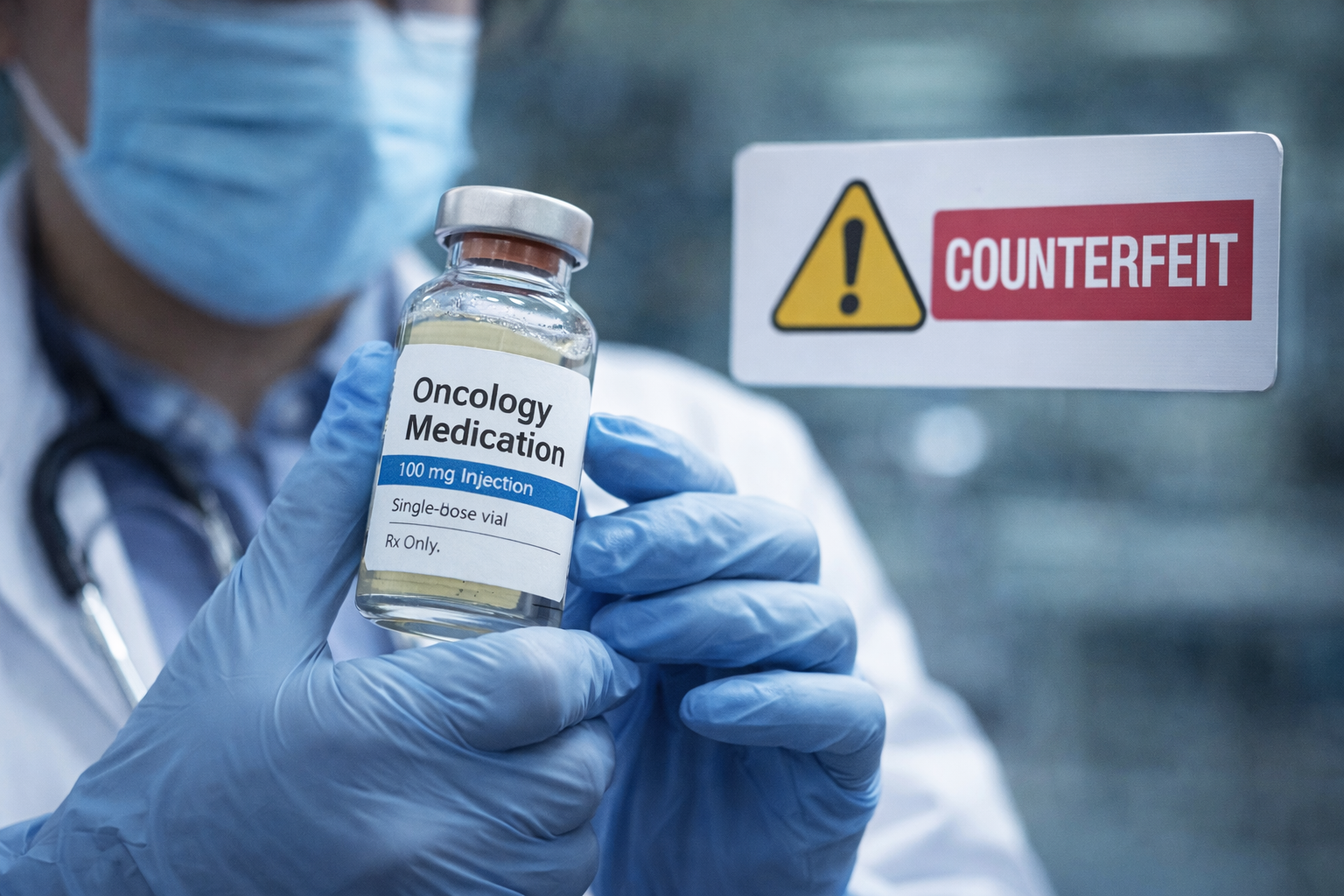
For a cancer patient, a vial of immunotherapy isn’t just medicine it is a lifeline purchased with life savings, loans, and unwavering hope. However, a chilling investigation in April 2026 has pulled back the curtain on a sophisticated “nexus of greed” where high-value oncology drugs are diverted from top-tier hospitals and replaced with lethal or inert counterfeits.
The scam centers on the drug Keytruda, a breakthrough immunotherapy manufactured by Merck & Co. (MSD). While the official market price for a 100 mg vial sits at approximately ₹1.5 lakh ($1,800), a black market operated by hospital staff, pharmacists, and engineers has been selling “discounted” versions that contain nothing more than salt water or diluted remains.
In this article, we explore how these fake cancer drug vials leaked from prestigious institutions, the systemic loopholes that allowed it, and what this means for the global oncology market and US investors.
The Anatomy of the ₹50 Crore Racket
The Delhi Police Crime Branch recently dismantled an interstate syndicate that had turned human tragedy into a profitable enterprise. The operation wasn’t just about manufacturing basement drugs; it was about the sophisticated infiltration of legitimate supply chains.
How the Leak Occurred
The scam relied on a critical loophole in hospital waste management. According to investigators and reports from The Indian Express, the syndicate exploited the disposal gap:
- Vial Diversion: Empty or semi-filled vials of expensive drugs were smuggled out of chemotherapy mixing rooms.
- The Re-filling Process: These genuine vials were then refilled with spurious substances, resealed with professional-grade equipment, and repackaged in counterfeit boxes that looked identical to the original.
- Hospital Insiders: The racket involved an MBBS doctor, owners of three pharmaceutical companies, and an engineer, according to a recent NHRC notice.
The Financial Backbone: Fake GST Firms
To give the trade an air of legitimacy, the syndicate used a parallel network of fictitious GST firms. By generating bogus invoices worth nearly ₹50 crore ($6 million), the criminals laundered the proceeds of the fake oncology drugs trade, making it nearly impossible for traditional audits to flag the transactions.
Why “Magic Injections” Target the Vulnerable
The demand for immunotherapy has skyrocketed as India’s oncology market is projected to grow by $2.36 billion between 2025 and 2030 (Technavio). However, the “financial toxicity” of treatment drives patients toward the grey market, increasing the risk of exposure to fake cancer drug products.
- The Price Point: At ₹1.5 lakh per shot, many families are forced to seek cheaper alternatives from unauthorized wholesalers or agents found in hospital corridors.
- The Trust Factor: Because the vials often featured genuine batch numbers (leaked from actual hospital stock), even seasoned doctors were occasionally duped during the administration process.
The price point of immunotherapy is demonstrably too high for the global population, noted a clinical oncologist in a recent trial report. This price gap is exactly where the counterfeiters thrive.
Global Implications for US Investors and Pharma
This is not just an Indian problem. The infiltration of global supply chains by counterfeit medicines is a primary concern for the World Health Organization (WHO), which estimates that 1 in 10 medicines in low- and middle-income countries are substandard or falsified.
Impact on US Pharma Giants
For companies like Merck & Co., these scams represent a dual threat:
- Reputational Risk: When a patient dies or fails to respond to “Keytruda” that turns out to be fake, the brand’s perceived efficacy is unfairly compromised.
- Liability and Regulation: US investors are closely watching how “Right to Life” litigations and NHRC interventions in India might force pharmaceutical companies to implement more expensive, tamper-proof tracking (like blockchain-enabled NFC tags) on every vial.
The Entrepreneurial Opportunity in “Health-Tech”
For Indian entrepreneurs, the crisis highlights a massive gap in MedTech. There is an urgent need for:
- Real-time vial tracking systems.
- CCTV-monitored “mixing-to-bedside” verification.
- Consumer-facing apps that allow patients to scan and verify the DNA of a drug’s packaging.
How to Spot a Fake Oncology Drug
The National Human Rights Commission (NHRC) and drug regulators have issued urgent guidelines for patients and caregivers:
- Verify the Batch: Cross-reference the batch number on the vial with the manufacturer’s official database.
- Inspect the Packaging: Look for inconsistencies in font, hologram placement, or the feel of the cardboard.
- Buy Only from Hospital Pharmacies: Avoid independent agents who claim to have excess stock or leftover vials from other patients.
- Demand a Formal Bill: Ensure the GST number on the bill is active and matches the pharmacy’s name.
Conclusion: A Call for Systemic Reform
The exposure of the fake cancer drug scam is a grim reminder that as medical technology advances, so does the sophistication of those looking to exploit it. The fact that “magic injections” could leak from top-tier hospitals suggests that physical security and digital tracking are no longer optional they are life-saving necessities.
Visit Augmenting Money for the most recent information.
Leave a Reply