
Highlights
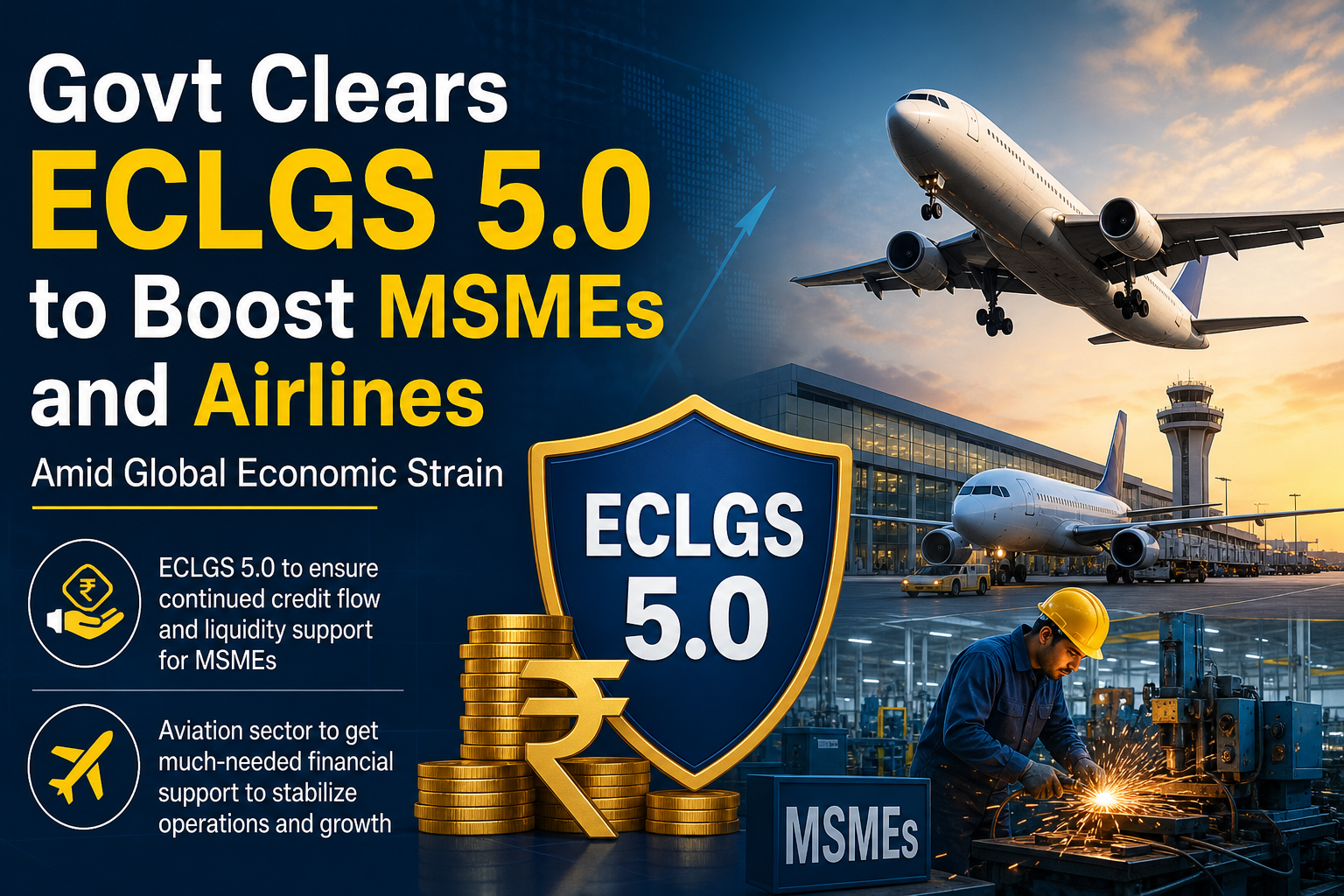
- ECLGS 5.0 approved to provide credit support and improve liquidity for MSMEs and airlines amid global economic pressure.
- MSMEs to benefit through easier access to loans, helping sustain operations, protect jobs, and drive growth.
- Aviation sector gets relief with financial backing to manage costs, stabilize operations, and support recovery.
India has taken another significant step to shield its economy from global uncertainties by approving ECLGS 5.0, the latest version of the Emergency Credit Line Guarantee Scheme. At a time when global markets are facing volatility due to inflationary pressures, geopolitical tensions, and slowing demand, this move is aimed at strengthening two crucial pillars of the economy Micro, Small, and Medium Enterprises (MSMEs) and the aviation sector.
The decision reflects the government’s proactive approach to ensuring that businesses, especially those vulnerable to external shocks, continue to have access to credit and liquidity. Over the past few years, schemes like ECLGS have played a vital role in stabilizing the economy during crises, and ECLGS 5.0 is expected to carry forward that legacy with a more targeted and refined approach.
Strengthening MSMEs: The Backbone of India’s Economy
MSMEs contribute significantly to India’s GDP, exports, and employment generation. However, they are also among the most sensitive sectors when it comes to economic disruptions. Global slowdowns, supply chain issues, and rising input costs have made it increasingly difficult for small businesses to maintain stable operations.
With the rollout of ECLGS 5.0, the government aims to ease these challenges by ensuring continued access to affordable credit. The scheme allows eligible MSMEs to avail additional loans with government-backed guarantees, reducing the risk for lenders and making it easier for businesses to secure funds.
Unlike earlier phases, ECLGS 5.0 is expected to be more focused on businesses that are still recovering from previous financial stress. Many MSMEs have survived the pandemic but continue to face liquidity constraints due to delayed payments, fluctuating demand, and increasing operational costs. By extending credit support, the government is enabling these businesses to stabilize cash flows, invest in growth, and retain their workforce.
Another important aspect of this scheme is its potential to boost confidence among lenders. Banks and financial institutions often hesitate to extend credit during uncertain times, but government guarantees under ECLGS 5.0 help mitigate that risk. This ensures that credit continues to flow into the economy rather than getting restricted due to cautious lending practices.
Moreover, the scheme aligns with the broader vision of making India a manufacturing and export hub. By supporting MSMEs, the government is indirectly strengthening supply chains, encouraging innovation, and promoting entrepreneurship across sectors.
Aviation Sector Gets a Much-Needed Lifeline
The aviation industry has been one of the hardest-hit sectors globally, facing challenges ranging from fluctuating fuel prices to inconsistent passenger demand. Even as travel demand has started recovering, airlines continue to grapple with financial pressures, including high operating costs and debt burdens.
Recognizing the strategic importance of aviation in economic growth and connectivity, the government has extended the benefits of ECLGS 5.0 to this sector as well. This move is particularly significant because airlines play a crucial role in facilitating trade, tourism, and business travel.
Through ECLGS 5.0, airlines will have access to additional credit backed by government guarantees, helping them manage working capital requirements and operational expenses. This includes costs related to fuel, maintenance, employee salaries, and fleet management.
The scheme also comes at a time when global aviation markets are facing uncertainty due to fluctuating oil prices and currency volatility. By providing financial support, the government is ensuring that Indian airlines remain competitive and resilient in the international market.
Beyond immediate financial relief, ECLGS 5.0 is expected to contribute to long-term stability in the aviation sector. Stronger airlines mean better connectivity, increased tourism, and improved business opportunities, all of which contribute to overall economic growth.
Addressing Global Economic Challenges with Policy Support
The approval of ECLGS 5.0 is not just a domestic policy decision—it is a response to broader global economic conditions. Rising interest rates in major economies, geopolitical conflicts, and slowing global trade have created an environment of uncertainty for businesses worldwide.
In such a scenario, government intervention becomes crucial to prevent economic slowdown from affecting domestic industries. By extending credit support through ECLGS 5.0, India is taking a preventive approach rather than a reactive one.
This strategy ensures that businesses do not face a liquidity crunch, which can often lead to layoffs, reduced production, and ultimately slower economic growth. Instead, the scheme encourages businesses to continue operations, invest in expansion, and maintain employment levels.
Another key advantage of ECLGS 5.0 is its targeted approach. Rather than a broad, one-size-fits-all solution, the scheme focuses on sectors that are most in need of support. This ensures efficient allocation of resources and maximizes the impact of government intervention.
The move also sends a positive signal to investors, both domestic and international. It demonstrates that the government is committed to maintaining economic stability and supporting key industries during challenging times. This can help boost investor confidence and attract more investments into the country.
Impact on Employment and Economic Growth
One of the most important outcomes expected from ECLGS 5.0 is the protection and creation of jobs. MSMEs are among the largest employers in the country, and any disruption in this sector can have a significant impact on employment levels.
By ensuring that MSMEs have access to credit, the scheme helps businesses retain their workforce and avoid layoffs. At the same time, improved financial stability allows these businesses to expand operations and create new job opportunities.
Similarly, in the aviation sector, financial support through ECLGS 5.0 helps airlines maintain their workforce and continue operations without major disruptions. This includes not just airline employees but also those working in related sectors such as airports, ground handling, and tourism.
The ripple effect of this support extends across the economy. Increased business activity leads to higher demand for goods and services, which in turn stimulates production and growth. This creates a positive cycle that benefits multiple sectors and contributes to overall economic development.
A Step Towards Long-Term Economic Resilience
While ECLGS 5.0 is designed to address immediate challenges, its impact is likely to extend into the long term. By strengthening key sectors and ensuring financial stability, the scheme contributes to building a more resilient economy.
One of the key lessons from recent global disruptions is the importance of preparedness and adaptability. Policies like ECLGS 5.0 reflect a shift towards proactive economic management, where potential risks are addressed before they escalate into major crises.
The scheme also highlights the importance of collaboration between the government, financial institutions, and businesses. By working together, these stakeholders can create an environment that supports growth, innovation, and stability.
Looking ahead, the success of ECLGS 5.0 will depend on effective implementation and timely disbursement of funds. Ensuring that eligible businesses can easily access the benefits of the scheme will be crucial in maximizing its impact.
Conclusion
The approval of ECLGS 5.0 marks a significant step in India’s efforts to navigate global economic challenges while supporting domestic industries. By focusing on MSMEs and the aviation sector, the government is addressing critical areas that play a vital role in economic growth and employment.
At a time when uncertainty dominates global markets, initiatives like ECLGS 5.0 provide much-needed stability and confidence to businesses. The scheme not only ensures access to credit but also lays the foundation for sustained growth and resilience.
As the global economic landscape continues to evolve, such proactive measures will be essential in maintaining momentum and ensuring that India remains on a steady path of development.
Visit Augmenting Money for the most recent information.
Leave a Reply