
Highlights
- Geopolitical Escalation: China’s Ministry of Commerce (MOFCOM) has enacted strict China export controls on 10 American companies, targeting defense contractors and key critical mineral producers.
- Tit-for-Tat Retaliation: The sudden trade restrictions serve as a direct response to Washington expanding its “Chinese Military Companies List” to include major tech and electric vehicle giants.
- Procurement Clampdown: Alongside the export ban, Beijing has prohibited its domestic government agencies from buying any products manufactured by dozens of prominent U.S. industrial and defense enterprises.
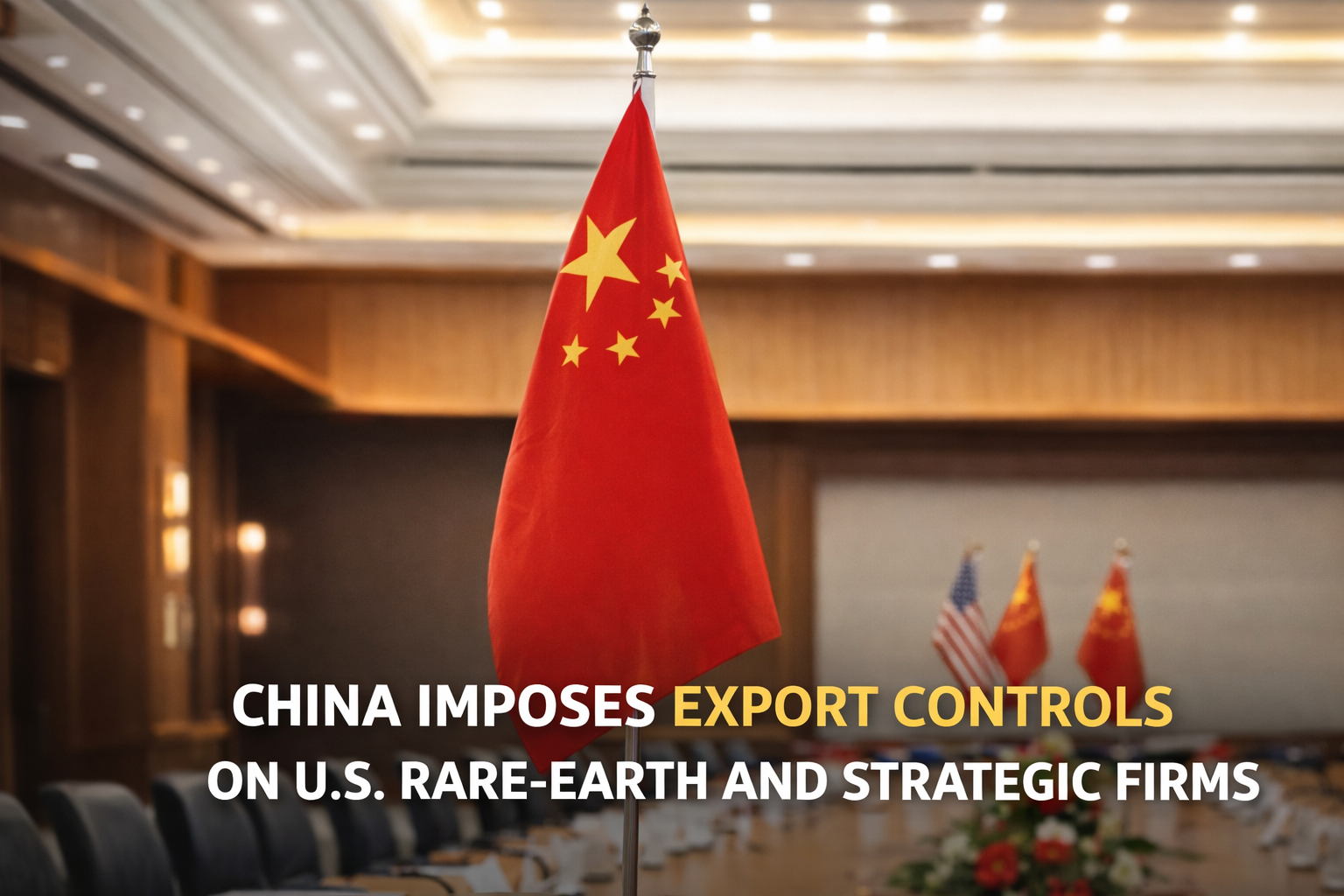
The delicate foundations of international trade, critical mineral sourcing, and sovereign tech supply networks have experienced a severe shockwave. In a dramatic move that marks a fresh deterioration in ties between the world’s two largest economies, Beijing has announced sweeping trade sanctions targeting key sectors of the American industrial base. China’s Ministry of Commerce (MOFCOM) officially executed a long-planned institutional response by blacklisting a targeted group of American enterprises. This regulatory escalation represents a calculated implementation of China export controls designed to disrupt the core operating capacities of prominent US rare earth firms and specialized military suppliers.
The sudden enforcement of these trade sanctions effectively ends a brief, monthslong period of relative stability between the two nations. Tensions had temporarily cooled following a high-level bilateral summit between the two heads of state, but that diplomatic progress was swiftly shattered. Washington’s recent decision to aggressively expand its Pentagon blacklist incorporating several of China’s most valuable technology, e-commerce, and electric vehicle conglomerates provoked an immediate, sharp response from Beijing. Characterizing the American actions as an egregious act of geopolitical overreach that suppresses Chinese access to global markets, MOFCOM officials declared that their retaliatory measures are absolutely necessary to protect domestic economic interests and safeguard national security.
For global technology manufacturers and commodity traders, this policy pivot hits the absolute “Achilles’ heel” of Western supply chain autonomy. By blocking the outward flow of essential items, the regulatory measures create an immediate challenge for American firms attempting to build a domestic ecosystem for advanced electronics, green energy hardware, and guidance systems. The restrictions mandate that any relevant export activities currently in motion must cease immediately, sending shockwaves through shipping hubs and corporate boardrooms alike.
Dissecting the Precision Sanctions on Critical Processing Infrastructure
A closer look at the corporate targets named in MOFCOM’s Announcement No. 23 of 2026 reveals a highly strategic selection process. The absolute focal point of this trade offensive centers on the two primary pillars of the emerging American critical minerals sector. By placing these specific US rare earth firms on its restricted trade roster, China is directly striking the Western strategy to reduce its long-standing reliance on Asian processing infrastructure. The targeted entities include the operator of the only active, large-scale rare earth mining and processing facility located inside the United States, alongside a prominent developer working to establish an integrated domestic permanent magnet manufacturing pipeline.
The consequences of these China export controls are structurally severe because they extend far beyond simple raw ore. The official mandate bars these American companies from accessing any dual-use items originating within China, which includes specialized processing components, refining software, and custom industrial machinery that have both commercial and military applications. Furthermore, the order introduces a powerful extraterritorial dimension. It explicitly prohibits organizations, individuals, or third-party logistics providers anywhere in the world from transferring or supplying Chinese-origin dual-use materials to the blacklisted firms, effectively building an international barrier around the targeted entities.
Government Procurement Bans and Corporate Carve-Out Maneuvers
As international economists analyze the long-term impact of this trade confrontation, a parallel directive issued by China’s Ministry of Finance is drawing intense scrutiny from multinational corporations. Moving simultaneously with the commerce ministry, the finance department has barred all domestic government procurement agencies from purchasing any products manufactured by dozens of American firms. This extensive procurement ban covers nearly 50 prominent industrial entities, including the world’s largest aerospace corporations, advanced missile and defense contractors, and specialized combat vehicle manufacturers. The immediate implementation of this policy completely locks these premium American manufacturing giants out of lucrative Chinese public sector contracts and infrastructure projects.
However, the specific wording of the finance ministry’s decree reveals a highly tactical approach designed to limit collateral damage to China’s own domestic manufacturing economy. The regulatory text explicitly carves out an exemption for foreign-funded, locally registered enterprises operating within Chinese borders, as well as products manufactured by U.S.-invested businesses located inside the country. By leaving this specific operational loophole open, Beijing is intentionally isolating direct American imports while protecting localized joint ventures and factories that employ domestic workers and contribute to the local tax base. This careful balancing act shows that while China is ready to engage in sharp retaliatory maneuvers, it remains focused on preserving its internal industrial stability.
From a broader macroeconomic and historical perspective, this intense trade dispute marks a permanent shift in how super-economies define supply chain security. The old era of open, globalization-first corporate strategies is being replaced by a highly fragmented landscape where critical minerals and high-tech software are used as primary tools of geopolitical leverage. As American US rare earth firms scramble to secure alternative, non-aligned suppliers for vital processing components, the international tech sector must prepare for an extended period of rising baseline costs and intense systemic competition. This bold move by Beijing demonstrates that the battle for technological dominance will be fought just as fiercely over raw physical elements as it is over advanced digital software
Visit Augmenting Money for the most recent information.
Leave a Reply