
Highlights
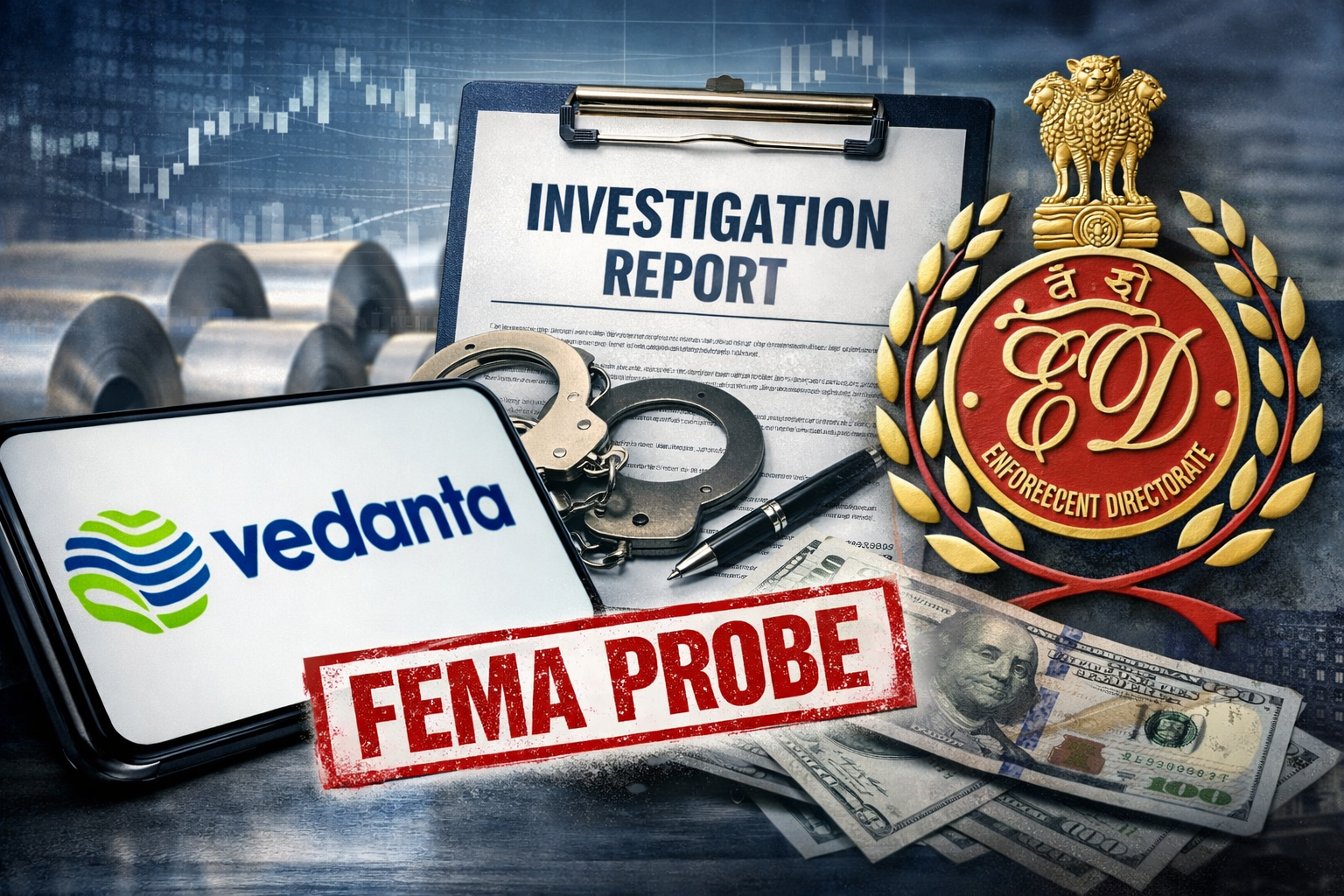
- Active Regulatory Action: The Enforcement Directorate launched comprehensive searches across multiple premier corporate premises tied to the conglomerate, specifically looking into compliance parameters.
- Focus on Royalty Transmissions: The civil financial probe centers around cross‑border fund flows, specifically analyzing large‑scale brand fee and royalty allocations transmitted from the domestic division to the offshore parent enterprise. Official Management Response: Spokespersons for the Vedanta Group corporate entity.
- Official Management Response: Spokespersons for the corporate entity have publicly confirmed the ongoing regulatory evaluation, stating that the firm is actively cooperating with agency officials and providing all requested financial logs.
Corporate corridors across India’s primary economic hubs witnessed an unexpected wave of regulatory enforcement as federal financial investigators executed a series of surprise operations. The premier financial intelligence and anti-money laundering authority, known as the Enforcement Directorate, officially mobilized multiple specialized teams to execute active searches targeting the high-profile infrastructure and resource conglomerate, the Vedanta Group.
The sweeping enforcement maneuvers were synchronized across premier corporate offices located in major urban hubs, including New Delhi, Mumbai, and selected administrative facilities in Rajasthan. This rapid escalation marks a significant deepening of oversight on the mining and metal giant’s international corporate actions.
The sudden appearance of federal investigative teams on corporate premises reflects an active transition from routine compliance inquiries into a formal civil investigation under the statutory provisions of the Foreign Exchange Management Act (FEMA). Senior agency officials close to the matter indicated that the operations commenced following a prolonged review of high‑volume cross‑border fund flow models managed by the Vedanta Group’s treasury divisions. While the early phases of the investigation remain confidential, the absolute scale of the enforcement action signals that the federal government is determined to rigorously verify that multi‑layered global transactions fully comply with India’s strict capital account regulations.
In response to the sudden arrival of federal teams at their main offices, executive leaders for the natural resources conglomerate moved quickly to issue a formal public clarification. A corporate spokesperson emphasized that the company maintains an unyielding commitment to local regulatory compliance across all jurisdictions where it operates its massive mining, smelting, and drilling infrastructure. The company confirmed it is extending complete transparency and full operational cooperation to the visiting agency officers, ensuring they receive rapid access to all digital ledger files, bank communication records, and corporate board resolutions relevant to the ongoing review.
Cross-Border Capital Flows and the Specific Mechanics of the Royalty Probe
A deeper look into the specific focus of the Enforcement Directorate reveals that investigators are paying close attention to the structural agreements governing how brand fees and intellectual property royalties are transferred within the broader corporate tree.
Financial intelligence sources indicate that the core of the probe involves a detailed evaluation of outbound cash flows sent from the publicly listed domestic entity, Vedanta Limited, to its ultimate offshore parent company, Vedanta Resources Limited, which is headquartered in London. These large-scale outbound payments are typically categorized as internal management charges, corporate brand licensing fees, or technical service reimbursements.
The core objective of the federal financial experts is to determine whether these multi-crore royalty transmissions were priced at genuine arm’s-length valuations, or if they were deliberately utilized as an artificial mechanism to shift profits out of the domestic jurisdiction.
Under India’s current foreign exchange framework, while current account payments like royalties are broadly permitted under automatic routes, they remain subject to strict documentation guidelines and fair-value pricing standards to prevent illegal base erosion and capital flight. Investigators are cross-referencing years of inner-company contracts, global transfer pricing files, and tax disclosures to see if these cross-border payments match the actual economic benefits received by the domestic Indian arms.
This sudden regulatory headwind arrives at an incredibly complex time for the Vedanta Group’s financial planners. The organization, guided by billionaire industrialist Anil Agarwal, has spent the past several quarters executing a massive, multi-stage corporate restructuring plan.
This aggressive corporate revamp is designed to split its vast natural resource operations spanning aluminum, oil and gas, power, iron ore, and digital steel manufacturing into six separate, independent, publicly listed pure-play entities. Equity analysts note that while a routine regulatory check does not equal a definitive finding of legal wrongdoing, the ongoing presence of federal investigators creates a significant layer of short-term uncertainty that could delay the final approval timelines for this massive demerger project.
Market Volatility and Long-Term Balance Sheet Ramifications for Capital Re-Rating
The immediate real‑time reaction across the domestic capital markets highlighted the deep sensitivity institutional fund managers feel regarding regulatory actions involving major corporate issuers. As news of the active searches in Delhi and Mumbai flashed across trading terminals, the flagship listed stock, Vedanta Limited, part of the Vedanta Group, experienced immediate, high‑volume selling pressure on both the National Stock Exchange (NSE) and the Bombay Stock Exchange (BSE).
The stock quickly gave up its early morning gains, sliding over 2.5% during intraday trading to hit a temporary local floor near ₹336.25 per share. This sharp dip reflects a classic “wait-and-watch” stance from large mutual fund desks, who prefer to wait for clear official statements before adjusting their long-term portfolio allocations.
This sudden regulatory friction stands in sharp contrast to the very positive credit news the natural resources giant had celebrated just days earlier. The group had proudly announced that premier domestic rating agency ICRA had upgraded the long-term credit ratings of its core corporate divisions to a highly secure ‘AA+’ grade.
This premium rating upgrade the highest the conglomerate had secured in over a decade was driven by substantial progress in reducing its overall debt load, strong global commodity prices, and steady cash generation from its highly profitable base metal and silver operations. Institutional debt investors viewed the upgrade as a clear sign of financial stability, which makes the timing of this new foreign exchange probe particularly disruptive to their long-term valuation models.
Long-term market observers with deep experience tracking India’s corporate history point out that this is not the first time the conglomerate’s unique cross-border capital structures have drawn the attention of federal financial regulators. Veteran analysts recall a major historical precedent from 2004, when the Enforcement Directorate found Sterlite Industries the primary corporate predecessor that was later restructured into the modern Vedanta framework guilty of multiple compliance failures under the older Foreign Exchange Regulation Act (FERA) and early FEMA frameworks, resulting in significant financial penalties.
As the current team of federal investigators transitions into the next phase of their work meticulously analyzing the massive trove of financial records, internal emails, and bank transaction files collected during the week’s searches the primary focus will shift toward the agency’s formal findings.
If the review confirms that the brand fee allocations were fully compliant with all applicable cross‑border rules, the Vedanta Group should see its market risk premium quickly return to normal levels, allowing its massive demerger project to move forward on schedule. However, if the agency chooses to escalate the matter into a formal show‑cause process, the resulting legal complications could create a multi‑month overhang on the stock price, testing the group’s financial resilience just as it attempts to secure fresh international capital.
Visit Augmenting Money for the most recent information.
Leave a Reply