
Highlights
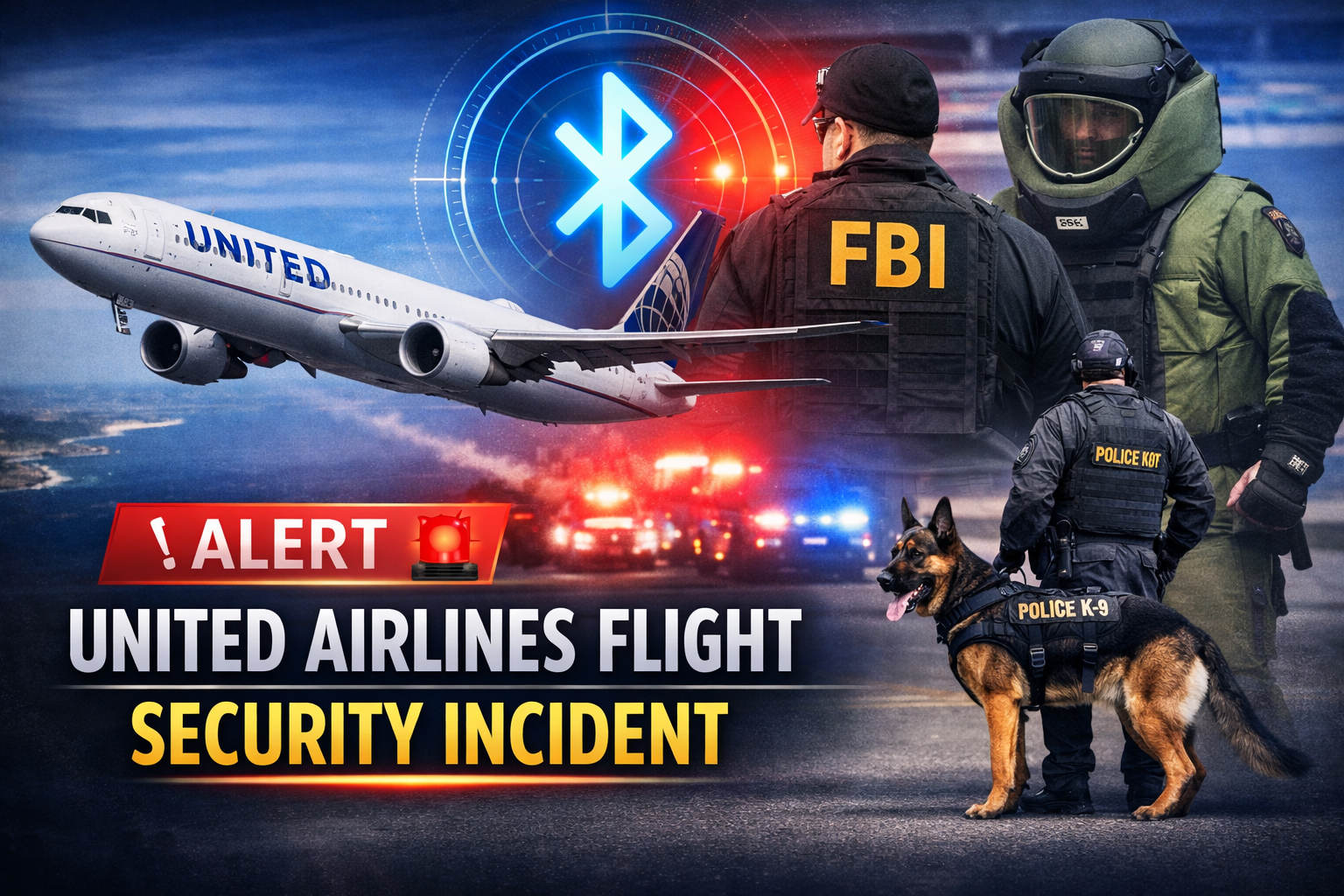
- Transatlantic Diversion: A Spain-bound United Airlines flight executed a complete mid-air U-turn over the Atlantic Ocean after a highly alarming discoverable network name triggered strict federal protocols.
- Ultimatum and Non-Compliance: Flight crew issued a final one-minute warning over the public address system demanding all passengers deactivate their wireless signals, turning the aircraft around after at least two devices remained active.
- Teenage Prank Unmasked: Upon an emergency landing back in New Jersey, law enforcement personnel traced the disruptive digital signal to a 16-year-old traveler who had modified a wearable device’s discoverable name to read “BOMB”.
Commercial aviation security frameworks faced an unprecedented test of digital compliance protocols when a transatlantic United Airlines flight was forced to abort its planned journey mid‑route. The international passenger service, operating as United Flight 236, had departed normally from its domestic hub at Newark Liberty International Airport in New Jersey, charting a direct course for Palma de Mallorca Airport in Spain. However, the routine long‑haul journey transformed into an active security incident roughly an hour into the flight, just as the Boeing 76‑400ER aircraft began navigating over open ocean territory. The sudden disruption forced flight operations managers to coordinate an immediate operational pivot in mid‑air.
The sudden tactical shift was set in motion when sharp-eyed passengers and cabin crew members noticed an alarming, highly visible digital signature flashing across local electronic device tracking menus. Aviation authorities later confirmed that an individual on board had deliberately altered the active broadcasting identity of a personal electronic peripheral to display a threatening message. In the hyper-vigilant environment of modern international aviation, the appearance of unverified threats within an aircraft’s localized wireless ecosystem automatically escalates into a Tier-1 emergency response protocol, overriding normal route clearances.
As the severity of the broadcast signal became clear to the flight deck, the captain initiated immediate contact with United Airlines’ centralized corporate headquarters in Chicago to establish an emergency mitigation strategy. Recognizing the potential threat vector posed by an unverified device displaying a hazardous identifier, operational directors issued a strict, non-negotiable directive to the cabin crew. The flight attendants promptly took to the public address system, commanding every traveler in the cabin to completely disable their short-range wireless connectivity functions to neutralize the transmitting signal.
The Flight Deck Ultimatum and the Mechanics of the Bluetooth Name Incident
The unfolding cabin drama quickly escalated as the flight crew struggled to secure total compliance from the nearly two hundred passengers resting in the main cabin. According to real-time accounts later compiled from verified passenger statements shared across digital community boards, the initial overhead announcements were met with a mix of confusion and irritation. Flight attendants repeatedly reinforced the absolute gravity of the situation over the speakers, stating clearly that the explicit order to drop all active connections came straight from executive security personnel at corporate headquarters. The crew warned that failing to clear the wireless spectrum would leave the pilots with no choice but to turn the entire aircraft around.
Despite multiple clear warnings from the cabin crew, several travelers either failed to understand the urgency of the situation or simply chose to ignore the instructions. In a last‑ditch effort to solve the digital security issue without ruining the international United Airlines flight, the lead flight attendant issued a final, strict one‑minute ultimatum over the PA system. Cabin monitors tracking local signals reported that even after this final deadline expired, at least two independent wireless nodes remained fully powered on and discoverable to nearby devices. This continued non‑compliance effectively exhausted the crew’s onboard intervention options.
Faced with a persistent, unidentifiable network signal that directly violated security protocols, the commanding pilot made the definitive call to prioritize passenger safety over schedule maintenance. The flight crew officially keyed in the standard transponder code 7700, signaling a general in-flight emergency to international air traffic control networks. With the emergency status activated, the pilots initiated a wide banking maneuver over the Atlantic waters, putting the multi-million-dollar widebody jet into a definitive mid-air U-turn back toward the New Jersey coastline.
Tactical Law Enforcement Interception and Comprehensive Tarmac Deplaning
As the diverted United Airlines flight widebody aircraft began its rapid descent back toward Newark Liberty International Airport, a massive coalition of local, state, and federal law enforcement agencies scrambled onto the active tarmac area. The ground team included specialized bomb disposal units, Port Authority police officers, and federal counter‑terrorism investigators, all deployed to handle a potential mid‑air sabotage threat. The air traffic control audio recordings archived during the return window painted a vivid picture of the unfolding ground response, with controllers confirming that a specialized security detail was pre‑positioned to meet the aircraft immediately upon landing.
When the aircraft finally taxied to a halt in a secured, isolated deplaning zone, the flight crew instructed all 190 passengers to leave their carry-on bags and personal luggage behind in the overhead bins. Travelers were told to exit the cabin holding only their primary identification passports and their mobile smartphones. This strict condition was put in place so forensic data specialists could scan and verify every single active wireless signal emitting from the deplaning passengers. The evacuated passengers were loaded onto transit buses and brought to a secure holding terminal to undergo secondary physical security screening.
While the passengers were being questioned in the terminal, tactical security teams and explosive‑detection canine units meticulously combed through the United Airlines flight’s main cabin, under‑seat storage areas, and lower cargo holds. Digital forensic examiners used localized signal‑tracking gear to map out the exact device logs associated with the Bluetooth name incident. Within a few hours of intensive tracking, investigators successfully isolated the source of the malicious broadcast. The signal did not originate from an explosive device, but rather from a standard electronic Fitbit wearable device belonging to a 16‑year‑old traveler.
The teenage passenger had apparently used the device’s customizable profile settings to change its discoverable name to the word “BOMB,” completely unaware of the strict automated security protocols that such an action would trigger. Port Authority police officers quickly took the juvenile into custody for further interrogation, though subsequent investigations confirmed the device itself posed no physical danger to the aircraft or its occupants. While federal authorities have not yet announced formal criminal charges, aviation legal experts note that the financial liabilities tied to diverting a widebody transatlantic flight could result in severe civil penalties and restitution demands against the family.
Following a multi‑hour delay on the tarmac to ensure total clearance of the vessel and cargo, the United Airlines flight brought in a fresh crew to relieve the original staff. The exhausted passengers were finally cleared to re‑board the aircraft and continue their delayed trip to Palma de Mallorca, landing in Spain roughly nine hours behind their original schedule. This high‑profile disruption serves as a stark warning to modern flyers about the real‑world consequences of digital pranks. As wireless tracking systems become increasingly woven into global transportation safety nets, a simple change to a device name can quickly trigger a massive federal response and disrupt travel plans for hundreds of people.
Visit Augmenting Money for the most recent information.
Leave a Reply