
Highlights
- Fast-Track Timeline: “Union Commerce Minister Piyush Goyal announced that India and Canada are pushing to finalize their long-pending free trade agreement, known as the India–Canada trade deal, by the end of 2026, or potentially much earlier.
- Ambitious Trade Blueprint: The bilateral strategy outlines an aggressive roadmap targeting a threefold increase in total economic engagement, aiming to scale trade from the current $17 billion to $50 billion by 2030.
- Focus on Low-Hanging Fruit: To prevent structural deadlock, both negotiating delegations have agreed to bypass highly sensitive domestic sectors like dairy and agriculture, focusing entirely on rapid areas of industrial and digital convergence.
The geopolitical and economic dynamics governing the Indo-Pacific corridor are entering a highly productive era of structural integration. India and Canada have dramatically shifted their trade diplomacy into a higher gear, seeking to wrap up their highly anticipated bilateral trade framework ahead of historical timelines.
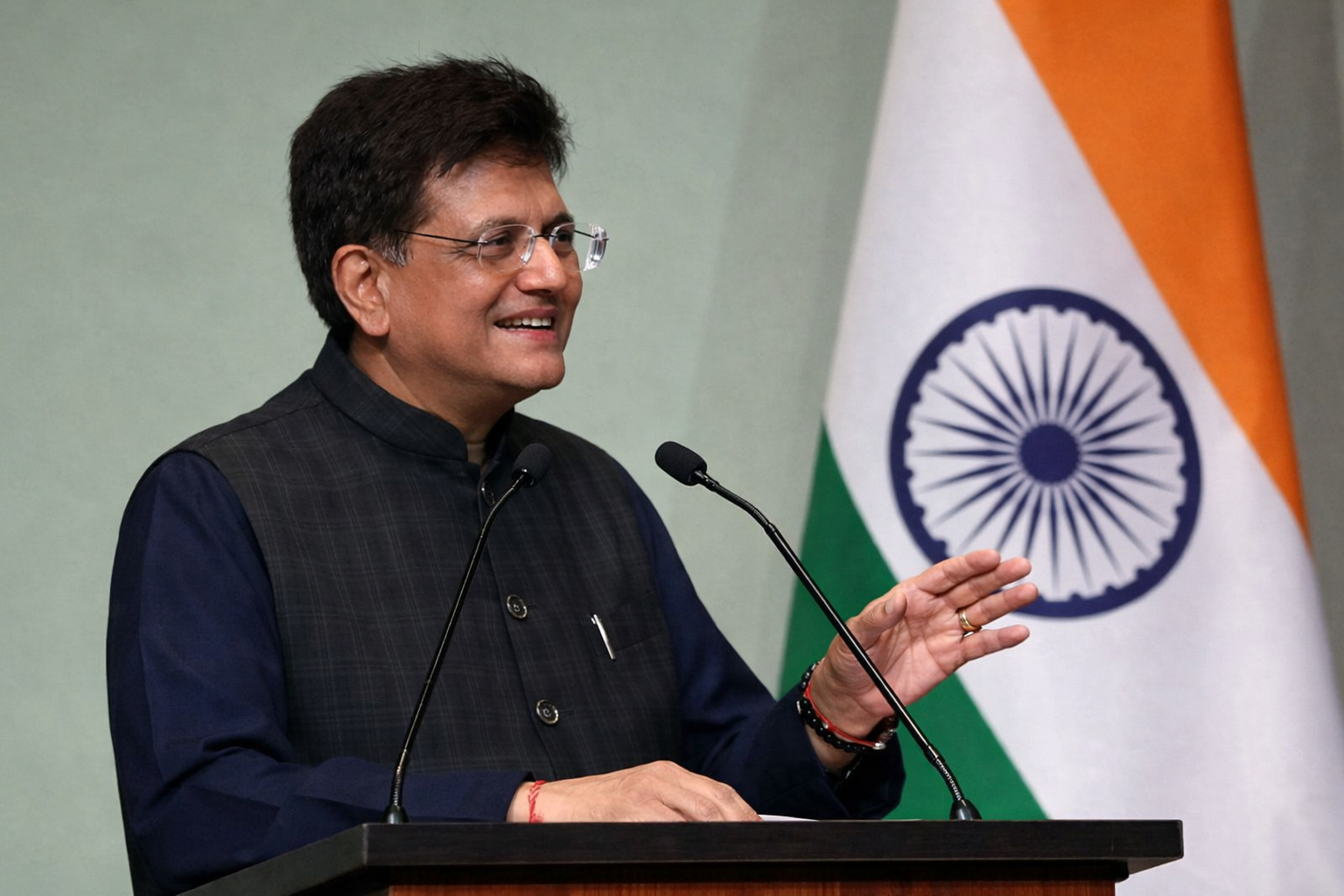
Union Minister of Commerce and Industry Piyush Goyal formally validated this accelerated trajectory following a series of high-level ministerial deliberations in Ottawa. This strategic development serves as a concrete operational manifestation of a broader economic reset, aimed at dismantling legacy tariff walls and establishing a streamlined, highly predictable marketplace for corporate entities operating across both sovereign jurisdictions.
A primary catalyst driving the sudden operational momentum behind the India–Canada trade deal is a clear directive from the highest tiers of political administration in both democracies. Speaking jointly to the international press alongside Canadian Trade Minister Maninder Sidhu, Goyal emphasized that both negotiating teams are operating under strict administrative mandates to fast-track the treaty’s core chapters.
The aggressive roadmap is intentionally designed to skip the multi-year bureaucratic delays that typically stall large-scale international trade compacts. By establishing a rapid, legally binding framework, both governments aim to insulate their respective business communities from broader global tariff volatility and supply chain fragmentation.
To ensure the trade framework achieves deep, structural resilience, the ongoing negotiation rounds are focusing heavily on establishing a balanced Comprehensive Economic Partnership Agreement (CEPA). The third round of these intensive, closed-door bilateral sessions concluded successfully in Ottawa, led by Chief Negotiator Brij Mohan Mishra from the Indian Department of Commerce and his Canadian counterpart, Bruce Christie.
This coordinated legislative push marks a dramatic turnaround from the brief diplomatic freeze observed in prior years. The rapid return of senior ministerial and working-level teams highlights a shared realization that a comprehensive trade pact is no longer a luxury, but an absolute strategic necessity to capture the next wave of global growth.
Dissecting the Pragmatic Strategy: Bypassing Sensitive Industrial Sectors
The defining operational approach ensuring the rapid finalization of the treaty is a calculated decision by both trade ministries to adopt a highly pragmatic negotiation strategy. In a widely discussed Piyush Goyal statement delivered at the Ontario Centre of Innovation, the Commerce Minister confirmed that both nations have explicitly agreed to focus on “low-hanging fruit” and avoid getting bogged down in historically sensitive economic sectors. By adopting a philosophy where negotiators “won’t make perfect the enemy of the good,” both teams are systematically leaving complex domestic fields entirely out of the initial treaty text. This prevents localized political pushback from derailing a multi-billion dollar trade opportunity.
| India’s Core Export Basket | Canada’s Core Export Basket |
| High-Grade Pharmaceuticals | Essential Pulses & Agri-Tech |
| Structural Iron & Steel Products | Metallurgical Coal & Fertilizers |
| Processed Seafood & Agri-Products | Sustainable Forestry & Paper |
| Electronics & Readymade Textiles | Petroleum Crude & Critical LNG |
This tactical isolation of sensitive markets means that highly protected domestic industries, most notably India’s extensive local dairy sector and Canada’s supply-managed agricultural commodities, will be completely insulated from duty reductions. Instead, the upcoming tariff relaxations will target highly complementary industrial sectors where both nations possess distinct manufacturing and resource advantages.
India’s outbound export basket stands to achieve a massive competitive boost across Western Canada, specifically within high-grade pharmaceuticals, structural iron and steel components, processed seafood, electronic sub-assemblies, and organic chemicals. Conversely, Canadian exporters will secure unprecedented, low-tariff access into India’s rapidly expanding manufacturing hubs for essential raw materials, including metallurgical coal, potash fertilizers, industrial paper products, and sustainable agricultural inputs.
Furthermore, this balanced commodity exchange runs parallel to an ambitious financial target established by the top leadership of both countries. The trade ministries have been formally tasked with executing a transformation that triples bilateral merchandise and services exchange from its current baseline of approximately $17 billion to a massive $50 billion by the year 2030.
chieving this steep growth curve requires a rapid reduction in the tariff asymmetries that have historically left Canadian resource exporters at a disadvantage compared to competitors from Australia or the UAE both of whom have already executed comprehensive trade pacts with New Delhi. The incoming CEPA framework will effectively level the playing field, ensuring that North American suppliers can tap directly into the world’s fastest-growing consumer market on a preferential basis.
Mobilizing Pension Capital and Deepening Next‑Generation Service Integration
Beyond the simple reduction of baseline customs duties on physical merchandise, the true economic weight of the India–Canada trade deal lies within its sophisticated provisions for services trade and cross-border capital allocation. During his extensive three-day institutional tour, Minister Goyal engaged directly with the chief executives of Canada’s massive, multi-trillion-dollar institutional pension funds and insurance conglomerates, including Jo Taylor of the Ontario Teachers’ Pension Plan and John Graham of CPP Investments.
These high-level financial dialogues focused heavily on aligning Canada’s long-term institutional capital with India’s massive national infrastructure pipeline, sustainable green energy transitions, deep-tech digital ecosystems, and large-scale industrial logistics corridors.
| Trade Agreement Core | Operational Strategy | Sector Specialization Wings | Strategic Action Pillars |
| India–Canada CEPA Pact | Low-Hanging Fruit Strategy (Bypassing highly sensitive domestic fields to accelerate trade talks) | Capital & Technology Wing | • Deploy Canadian Pension Capital • Scale AI & Cleantech Startups • Deepen Digital Public Infrastructure |
| Resource & Commodities Wing | • Secure Clean Energy & LNG Lines • Source Critical Battery Minerals • Advance Cross-Border Agri-Tech |
The services framework within the upcoming trade agreement is explicitly designed to safeguard and expand the highly lucrative digital public infrastructure and knowledge-economy corridors connecting the two societies. India’s world-class information technology exporters, telecommunication specialists, and business process outsourcing architectures are poised to receive streamlined regulatory paths, easing professional mobility and technical certification friction within the North American corporate landscape.
Simultaneously, the agreement will provide a secure framework to foster cross-border academic research, digital innovation bridges, and specialized talent pipelines, directly supporting the more than 425,000 Indian students currently pursuing advanced higher education across Canadian academic institutions.
Crucially, the strategic intersection of energy security and critical minerals forms the final, unbreakable anchor of this modernized economic relationship. Following a landmark political reset, the commercial pipeline is already scaling up to handle massive, multi-billion dollar transfers of liquefied natural gas (LNG), clean fuels, and critical battery minerals like copper and lithium, which are absolutely vital to power India’s domestic electric vehicle transition.
By combining Canada’s vast, unmined natural resource wealth with India’s immense digital processing capabilities and manufacturing scale, the finalized trade treaty creates a powerful, highly complementary industrial loop. As the technical negotiating teams return to their desks to draft the final statutory provisions, the corporate communities in both nations are preparing for a historic era of integrated, highly resilient cross-border expansion.
Also Read: India, South Korea Advance CEPA Upgrade Talks to Address Trade Deficit
Leave a Reply