
Highlights
- Unannounced Maiden Flight: Beijing has stunned the global aerospace community by executing an unannounced orbital launch of its newest next‑generation China reusable rocket space transportation system.
- Direct Starlink Alternative: The primary objective of this historic mission was the deployment of an initial cluster of low Earth orbit communication satellites for the expanding Qianfan mega-constellation.
- Vertical Landing Validation: The successful flight demonstrated advanced throttleable liquid-propellant engine controls, establishing a critical foundation for complete first-stage recovery in upcoming missions.
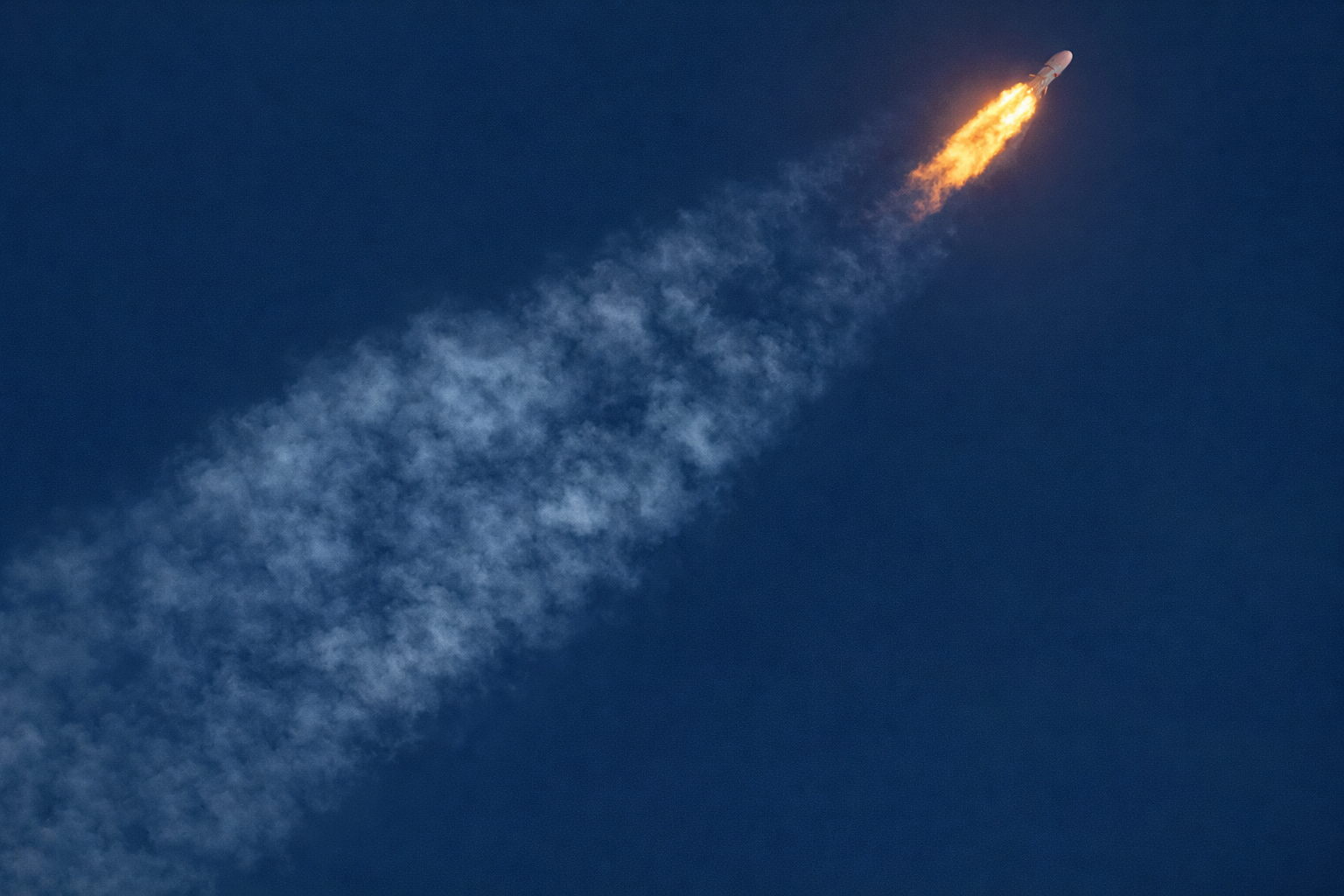
The global space race has entered a highly disruptive, capital-intensive phase following an unprecedented technological demonstration from Asia’s premier space program. In an unexpected operational move that caught international military intelligence networks and commercial satellite operators completely off guard, Chinese aerospace authorities have successfully executed the maiden flight of their newest orbital asset. Operating from the newly developed Dongfeng commercial space innovation pilot zone in the wind-swept deserts of northwest China, the mission officially introduced a massive technological shift. The primary objective of this unannounced flight was the real-world validation of a highly advanced China reusable rocket system.
The sudden, unannounced nature of this specific deployment highlights a sharp shift in how the nation manages its commercial and military aerospace milestones. Historically, major rocket launches from the region have been preceded by public international maritime hazard notices, commercial airspace closures, and formal state media advisories to prevent localized logistical conflicts. However, this groundbreaking mission was conducted with absolute operational stealth, with official confirmation arriving only after the multi-stage vehicle had successfully cleared the upper atmosphere and achieved stable orbit insertion. This bold strategy underscores the growing confidence of the country’s engineering leadership and confirms that the domestic space ecosystem has achieved rapid-deployment capabilities that rival Western commercial players.
For international defense analysts and commercial aerospace executives tracking the shifting balance of power in the upper atmosphere, this successful Chinese space launch marks the end of an era of unchallenged Western dominance in reusable launch infrastructure. For the past decade, private American firms have enjoyed a near-monopoly on rapid-recovery vertical landing rockets, allowing them to dramatically lower the cost per kilogram of launching orbital payloads. By introducing a functional, large-scale reusable alternative, Beijing is actively signaling its intent to aggressively compete for international launch contracts, carve out an uncontested market share in the global satellite economy, and construct highly resilient orbital networks at a fraction of historical costs.
Dissecting the Methane-Oxygen Architecture and Mega-Constellation Framework
A granular evaluation of the technical data compiled by global tracking networks reveals that this newly unveiled heavy‑lift vehicle utilizes a highly sophisticated propellant configuration. Moving away from the highly toxic, non‑reusable hypergolic propellants that fueled the nation’s legacy space assets, the China reusable rocket relies on an eco‑friendly liquid methane and liquid oxygen (methalox) propulsion engine network. Methalox has rapidly emerged as the gold standard for reusable rocket designs worldwide because it burns incredibly clean, leaving virtually zero soot accumulation within the complex turbo‑pump machinery. This lack of residue allows engineers to rapidly inspect, refurbish, and re‑fly recovered booster stages without undergoing lengthy, million‑dollar engine overhauls.
The physical proportions of the newly launched vehicle indicate that it is custom-built to support massive, high-volume orbital constellation deployment campaigns. Standing at a commanding height and featuring a wide payload fairing, the booster is specifically engineered to carry dense, structurally stacked satellite clusters into low Earth orbit in a single mission. Financial and technical analysts note that this heavy-lift capability is the absolute linchpin of China’s broader strategic goal: the rapid assembly of the Qianfan, or “Thousand Sails,” communications mega-constellation. This state-backed satellite network is designed to act as a direct alternative to Western networks, providing independent, high-speed global internet coverage for both civil enterprise applications and national security frameworks.
| Phase / Axis Layer | Primary Segment | Key Technical Specifications & Impact |
| Chinese Space Launch Initiative | Surprise Methalox Propulsion | * Uses liquid methane and liquid oxygen (methalox) fuel configuration. * Eliminates heavy soot buildup to allow rapid engine refurbishment. |
| China Reusable Rocket Platform | Deployment of “Thousand Sails” Cluster | * Heavy-lift vehicle built for high-volume satellite stacking. * Direct structural delivery platform for China’s mega-constellation. |
| Independent Global Mesh Network | Final Operational Orbit | Autonomous global broadband mesh network providing secure, independent data coverage. |
The successful execution of this maiden flight proves that the country’s commercial space sector has moved far past basic conceptual blueprints and entered the phase of high-rate industrial manufacturing. The underlying corporate architecture behind these reusable programs features a highly unique combination of state-funded research grants and aggressive private venture capital funding. This dual funding engine allows agile aerospace startups and specialized state-owned enterprises to rapidly build out massive, high-volume production facilities. These automated assembly centers are already capable of manufacturing hundreds of standardized, high-performance engines and composite hull components every single year, ensuring the country can sustain a relentless, high-frequency launch calendar over the coming decade.
Tactical Vertical Recovery Systems and Post-Listing Launch Economics
As telemetry data from the surprise mission continues to be analyzed by international satellite tracking stations, the primary focus of the global aerospace community has shifted to the China reusable rocket’s advanced descent‑stage flight profile. While this inaugural mission operated in a partially expendable mode to prioritize payload safety, the first stage was equipped with advanced landing leg housings, foldable grid fins, and highly specialized throttle‑controlled guidance software. These integrated components were actively tested during the booster’s high‑velocity reentry through the upper atmosphere, proving that the navigation computers can successfully guide a massive heavy‑lift hull through intense aerodynamic forces back toward a localized landing pad.
Achieving reliable, repeatable vertical recovery will completely transform the financial models governing Asia’s commercial space sector. By avoiding the need to discard millions of dollars of precision aerospace electronics and high-grade metal alloys into the ocean after every single flight, launch providers can drop their baseline operational costs to unprecedented lows. This radical price drop will enable the country to offer incredibly cheap launch services to international clients across Latin America, Africa, and Southeast Asia. This affordability allows them to build deep diplomatic and commercial partnerships while locking international customers into long-term technology ecosystems managed directly from Beijing.
Furthermore, this rapid leap in space infrastructure is strategically timed to integrate perfectly with the country’s massive expansion in ground-based launch facilities. Just last month, engineers completed construction on several specialized, high-capacity commercial launch pads at the Wenchang Space Launch Site and various inland testing facilities. These state-of-the-art facilities are custom-designed to handle the unique fueling requirements, safety zones, and rapid turnaround schedules required by vertical-landing rockets. This extensive ground infrastructure ensures that once the reusable booster fleet achieves full operational certification, the country can smoothly scale up its launch frequency to handle dozens of missions per month without facing severe logistical bottlenecks.
From a long‑term geopolitical and macroeconomic perspective, this surprise launch marks a critical turning point for the global high‑tech economy. With space‑based assets increasingly serving as the core infrastructure for autonomous transportation networks, international maritime tracking, real‑time climate monitoring, and global defense communications, possessing an independent, cheap, and rapid‑recovery launch system such as the China reusable rocket is a vital national asset. As domestic engineering teams prepare to execute their first fully recovered vertical landing test later this year, the global aerospace market looks poised for an intense period of price competition and rapid innovation. This shift cements the nation’s role as a dominant, highly capable leader of the new global space economy.
Visit Augmenting Money for the most recent information.
Leave a Reply